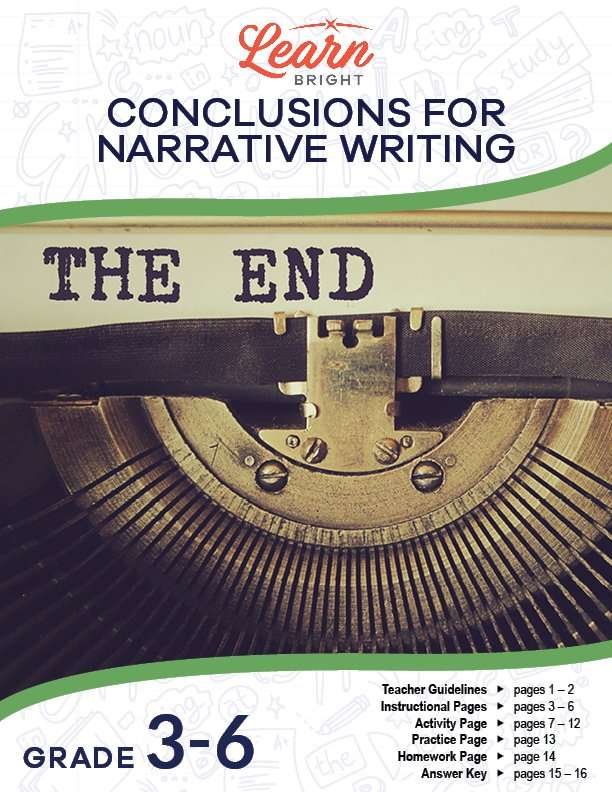
The final sentence. The last paragraph. The concluding chapter. These aren't just points of cessation in your story; they are the reverberation, the lasting impression, the echo that lingers long after your reader has closed the book or scrolled past the final word. Mastering Narrative Conclusions & Endings isn't merely about tying up loose ends; it's about making your story unforgettable.
As a writer, you’ve poured your heart into the journey, crafted compelling characters, and navigated intricate plots. But it's the ending that elevates a good story to a great one. It’s the moment you fulfill promises, deliver insights, and either satisfy or strategically unsettle your audience. Ignore it at your peril, and you risk leaving your readers feeling cheated, confused, or, worst of all, indifferent.
At a Glance: Crafting Unforgettable Endings
- Endings are Crucial: They leave the lasting impression, reinforcing meaning and emotional impact.
- Aim for Closure (Emotional & Thematic): Help readers process what happened and internalize the story's message.
- Know Your Ending Types: From reflective to circular, ambiguous to twist, each serves a different purpose.
- Show, Don't Tell Growth: Demonstrate character transformation through actions and realizations, not exposition.
- Match Tone & Pace: Ensure your conclusion aligns with the overall feeling and rhythm of your narrative.
- Avoid Common Traps: Steer clear of abrupt stops, over-explanation, new information, and clichés.
- The Final Sentence is Gold: Make it powerful, resonant, and memorable.
- Edit Relentlessly: Read aloud, seek feedback, and ensure your ending truly satisfies the story you told.
Why the Final Page Matters More Than You Think
Imagine savoring a gourmet meal, each course a delight, only for the waiter to snatch your plate away mid-dessert. That’s an abrupt ending. Or perhaps they bring you a second appetizer instead of the main course you expected – that’s an ending that introduces new, unresolved information. A truly satisfying conclusion, however, is the perfect dessert, the digestif, the conversation that lingers after the meal, leaving a sweet and memorable taste.
A strong conclusion does three vital things, ensuring your narrative's impact goes far beyond the literal final word:
- Emotional Closure: Your readers have invested time and emotion in your characters and their struggles. A thoughtful ending helps them process what the narrator or characters have learned, experienced, or lost. It allows them to feel the weight of the journey and the significance of its culmination. Without this, your audience might feel unmoored, their emotional investment left hanging in the balance.
- Thematic Reinforcement: Every good story has a core message, a central question it explores, or a life lesson it implicitly or explicitly teaches. The final lines of your narrative are the ultimate opportunity to underscore this central theme. It's not about being repetitive or preachy; it's about demonstrating how the journey has affirmed, challenged, or reshaped the story's underlying truth. This reinforcement cements the story’s purpose in the reader's mind.
- Reader Satisfaction: Beyond just "getting an answer," readers crave a sense of completeness. This doesn't always mean a "happily ever after," but rather an ending that feels earned, logical within the story's framework, and fulfilling. It validates their time spent and offers a sense of finality to the created world, even if that finality is open-ended. A well-structured ending rewards the reader for their engagement.
This final impression is what determines if your story will be merely consumed or truly cherished and recommended. It's the difference between "that was a good read" and "I can't stop thinking about that story." If you’re striving for narratives that truly resonate, you’ll want to Delve into Ever Afterwards and perfect the art of concluding them.
The Anatomy of a Truly Satisfying Ending: Beyond "The End"
A satisfying ending isn't a one-size-fits-all solution. Its success hinges on the genre, the story's tone, and the promises you've made to your reader along the way. Yet, there are universal elements that contribute to that feeling of fulfillment:
- Resolution (or lack thereof, if intentional): This doesn't mean every single plot thread needs to be neatly tied in a bow. Often, the main conflict is resolved, while subplots might be left slightly open for reflection or future installments. The key is to resolve the primary tension, the core question that drove the narrative.
- Resonance: The ending should echo themes, motifs, or significant moments from earlier in the story. This creates a sense of cohesion and demonstrates how the journey has altered perspectives or solidified understanding. It’s the feeling that everything fits.
- Impact: Does the ending evoke the intended emotion? Does it provoke thought? Does it change the reader's understanding of what came before? A powerful ending leaves an indelible mark, prompting reflection and perhaps even a re-evaluation of their own beliefs or experiences.
Beyond "The End": Exploring Types of Narrative Conclusions
Just as there are myriad ways to begin a story, there are countless approaches to bringing it to a close. Choosing the right one depends entirely on what your story needs to achieve in its final moments.
1. The Reflective Ending
This is a common and powerful technique, especially in personal narratives, essays, and character-driven fiction. It revisits the central theme and shows what the narrator or key characters have learned, gained, or lost throughout their journey. The reflection often provides insight into their growth, a moment of profound realization, or a quiet acceptance of change.
- How it works: The narrator directly or indirectly shares their changed perspective, often summarizing the emotional or intellectual journey.
- Example: "And from that day, I stopped fearing failure—it had become my greatest teacher. The sting of rejection still smarted, but now I knew it wasn't a dead end, only a detour on the winding path to genuine understanding."
- Best for: Stories about personal growth, coming-of-age, overcoming adversity, or exploring complex themes where the internal journey is paramount.
2. The Circular (or Echo) Ending
A circular ending creates a powerful sense of symmetry and cohesion by returning to an image, phrase, question, or idea presented at the story's beginning. It closes the loop, showing how much things have changed or, conversely, how some fundamental truths remain constant despite the journey.
- How it works: The narrative cycles back to its starting point, but with new meaning or understanding layered upon it.
- Example: If you began with a character staring out at a particular old oak tree, contemplating their future, you might end with them looking at the same tree, now understanding their past and the path they chose. "The old oak stood sentinel, just as it had that morning, but its shadow now fell on a different person, one who finally understood the quiet strength in staying rooted, even when the world spun."
- Best for: Narratives that emphasize themes of destiny, fate, cyclical patterns, or profound character transformation that recontextualizes the beginning.
3. The Twist or Surprise Ending
Used carefully and effectively, this ending delivers an unexpected revelation that completely shifts the reader's perspective on everything that came before. It recontextualizes events, characters, or motives, demanding a re-read or leaving a gasp of astonishment.
- How it works: A critical piece of information is withheld until the very last moment, or a long-held assumption is suddenly overturned.
- Example: "Only later did I realize—he hadn’t lost the watch. He’d sold it to buy me the antique atlas I had dreamed of, the one that now sat, heavy and beloved, on my bookshelf."
- Best for: Mysteries, thrillers, psychological narratives, or stories where dramatic irony and unexpected turns are central to the experience.
- Caution: A twist must feel earned, not cheap. It should be foreshadowed subtly enough not to be obvious, but present enough to make sense in hindsight. Avoid "deus ex machina" twists where an outside force conveniently resolves everything.
4. The Dialogue Ending
A final piece of dialogue can be incredibly potent, especially if it encapsulates emotion, resolves a conflict, or offers a poignant final thought from a character. It can be a simple exchange, a declaration, or a question that hangs in the air.
- How it works: The story concludes with one or more characters speaking, their words carrying the weight of the narrative's conclusion.
- Example: "I finally understood, Dad," I whispered, the words catching in my throat. "And that's why I came back."
- Best for: Character-driven stories, plays, or narratives where the relationships and interactions between people are the core focus.
5. The Call to Reflection (or Open-Ended)
This ending doesn't provide all the answers but instead invites the reader to think deeply about the story's implications, characters' choices, or moral dilemmas. It leaves room for interpretation, encouraging the reader to carry the story's questions beyond the final page.
- How it works: The narrator poses a question, leaves a situation unresolved, or hints at future possibilities without explicitly detailing them.
- Example: "What would you have done if you were in my place? And would you have lived with the consequences, or found a way to rewrite your own ending?"
- Best for: Philosophical narratives, moral allegories, college essays, or stories where ambiguity serves to deepen the thematic exploration rather than frustrate the reader.
6. The Thematic/Symbolic Ending
Often overlapping with reflective or circular endings, this approach uses a powerful symbol, image, or metaphor to encapsulate the story's core theme without stating it explicitly. It allows the reader to connect the dots and infer meaning.
- How it works: The final scene or image is carefully chosen to represent the story's overarching message or character arc.
- Example: A story about overcoming a dark past might end with the protagonist planting a single, resilient seed in freshly tilled earth, looking toward the horizon.
- Best for: Literary fiction, allegories, or narratives where subtlety and depth of meaning are highly valued.
Remember, the goal is not to list every type, but to find the one that resonates most powerfully with your specific narrative. Sometimes, a conclusion might even blend elements of several types.
Crafting Your Conclusion: A Practical Playbook
Writing a powerful ending isn't a magical act; it's a deliberate process that begins long before you type "The End."
Phase 1: Before You Write "The End"
Your conclusion's strength starts with the foundation you build throughout your narrative.
- Understand Your Story's Core Question/Conflict: What is the central problem your protagonist faces? What is the main question your story poses? Your ending must address this, even if the answer is "there is no easy answer." For instance, a detective story's core question is "Who did it?" The ending must reveal the culprit. A romance's core question might be "Will they get together?" The ending provides the resolution.
- Know Your Character's Arc: How has your protagonist changed (or failed to change) from beginning to end? Your conclusion is the final showcase of this transformation. If they learned patience, show it. If they became more resilient, demonstrate it. This growth (or the tragic lack thereof) is key to emotional satisfaction.
- Decide on Your Story's Message/Theme: What do you want your readers to take away? Your ending should align with and reinforce this theme. If your theme is about the arbitrary nature of fate, a neat, tidy ending might feel false. If it's about the triumph of the human spirit, an uplifting resolution might be appropriate.
- Consider Your Reader's Experience: What emotions do you want to evoke? What level of closure do you intend to provide? Thinking about your audience helps you tailor the final notes. Do you want them to feel hope, despair, wonder, or unease?
Phase 2: Writing the Final Words
Once you have a clear vision for your ending, it's time to bring it to life.
- Show, Don't Tell Growth or Change: This is perhaps the most critical piece of advice. Don't write, "And that's how I learned a valuable lesson about patience." Instead, show the character performing an act of patience they couldn't have managed at the story's beginning. Demonstrate their changed perspective through their internal thoughts, a quiet action, or a meaningful piece of dialogue. Example from research: "I walked out of that café not just older, but wiser." This sentence implies growth rather than stating it explicitly.
- Match the Tone and Pace: Is your story a fast-paced thriller? A quiet meditation? A humorous romp? Your ending should reflect this. A thriller might end with a sudden, sharp final beat, while a reflective piece might slow down, lingering on a final image or thought. Ensure your closing lines align with the overall tone—humorous, somber, hopeful, ironic, etc.
- The Power of the Final Sentence: Your last sentence is the mic drop. It should resonate, echo the story's themes, or provide a powerful final image. It's often the sentence readers remember most. Make it count. It can be a question, a profound statement, or a simple, understated line that carries immense weight.
- Keep it Brief but Meaningful: Your ending shouldn't drag on forever. Aim for 3-5 impactful sentences in an essay or a concise final scene in a longer narrative. It's about distillation, not elaboration. Every word should pull its weight.
Avoiding Common Pitfalls: What NOT to Do
Even experienced writers can stumble at the finish line. Steer clear of these common conclusion killers:
- Abrupt Endings: Don't just stop once the main plot point is resolved. Allow space for reflection, emotional processing, or a final beat. Readers need a moment to breathe and internalize what they've just experienced. It’s like stopping a movie mid-credits.
- Over-Explaining or Preaching: Trust your reader to grasp the meaning without you spelling it out. If your themes and character arcs are woven effectively throughout the narrative, your conclusion shouldn't need to re-state them directly. "And that's how I learned a valuable lesson" is a classic cliché because it tells instead of showing and often treats the reader as unintelligent.
- Introducing New, Unresolved Information: The conclusion is not the place for major plot points, new characters, or significant ideas that then go undeveloped. If you introduce something new, it should be a final, illuminating detail that recontextualizes what's already known, not a fresh mystery.
- Cliché Endings: Avoid overused lines or predictable scenarios unless you're intentionally subverting them. "It was all a dream," "And they lived happily ever after" (without earning it), or the aforementioned "valuable lesson" are often signals of a conclusion written without sufficient thought.
- The "Everything's Okay Now" Trap (for complex stories): If your story explores deep, difficult themes, a sudden, saccharine happy ending can feel false and undermine the authenticity of the narrative. An ending can be satisfying without being perfectly happy. Sometimes, true closure comes from acceptance, not complete resolution.
- Deus ex Machina: This is a plot device where an seemingly unsolvable problem is suddenly and abruptly resolved by an unexpected and unlikely intervention. It’s a literal "god from the machine" (from ancient Greek theatre) that feels unearned and cheats the reader of a satisfying resolution earned by the characters' efforts.
The "What If": Handling Specific Scenarios
The principles of strong conclusions apply broadly, but different types of narratives often have unique considerations.
Ending a Series
For a series, you have a dual challenge: concluding the current installment while potentially setting up the next.
- Arc Resolution: Ensure the primary conflict of this particular book is resolved. Readers need that satisfaction.
- Breadcrumbs for the Future: Introduce a new mystery, a looming threat, or a character revelation that hints at what's to come, without making the current ending feel incomplete. This is often called a "cliffhanger" if left completely open, or a "setup" if it's more subtle.
- Thematic Carry-Over: While a core theme might conclude in one book, overarching themes can evolve across the entire series, tying them together.
Ending an Open-Ended Narrative
An open ending is a deliberate choice, not an accident.
- Intentional Ambiguity: The ambiguity must serve a purpose, such as reinforcing the theme that life is uncertain, challenging societal norms, or encouraging deep reader reflection.
- Character Trajectory: Even if the plot isn't neatly resolved, the character's internal journey often reaches a point of understanding or acceptance, or a clear trajectory for their future. The lack of a clear plot resolution doesn't mean a lack of character closure.
- Leave Them Thinking, Not Frustrated: The line between intriguing ambiguity and frustrating lack of resolution is thin. Ensure you've provided enough context and emotional payoff for the ambiguity to feel meaningful.
Ending a Personal Essay vs. Fiction
While the general principles remain, the nuances shift.
- Personal Essay: Often focuses on the narrator's personal transformation, the why and how of their learning. Reflective and call-to-reflection endings are particularly powerful here. The focus is on the author's insight and what the reader can learn from it.
- Fiction: Can be more varied. While character growth is still vital, plot resolution, world-building implications, and broader thematic statements often take center stage. The satisfaction comes from the story's internal logic and emotional impact.
No matter the format, remember that your concluding thoughts and images are the last you leave with your audience. To ensure your stories truly resonate, you'll benefit from understanding how to craft endings that are both satisfying and impactful. You might find even more inspiration and techniques if you decide to explore further into what makes a story conclude with ultimate resonance.
Polishing Your Grand Finale: The Editing Process
You've written "The End." Now, the real work begins: making sure it’s truly the right end.
- Read Aloud: This is invaluable. Reading your conclusion aloud helps you catch awkward phrasing, unintended rhythms, and ensures the emotional beats land correctly. Does it flow? Does it sound authentic?
- Get Feedback: Share your conclusion (and ideally, the whole story) with trusted readers, ideally those who haven’t read it before. Ask specific questions:
- "Does this ending feel satisfying?"
- "Did it make sense based on what happened earlier?"
- "What emotions did it evoke?"
- "Does it feel earned?"
- "Are there any lingering questions that feel frustrating rather than intriguing?"
- Check for Consistency: Does the tone of your ending match the tone of the rest of the story? Does your character’s final action or realization align with their established personality and arc? An inconsistent ending can unravel the entire narrative.
- Does it Satisfy You?: Ultimately, you are the first reader. Does your ending feel true to the story you wanted to tell? Does it evoke the emotions you intended? Don't be afraid to rewrite it until it does. Sometimes, the initial ending you envisioned might not be the one your story demands. Remember that every great ending comes from a thoughtful culmination, not just a stop. To truly master this, one might consider how to craft narratives that leave a lasting imprint on the mind.
Your Story's Lasting Impression
The conclusion of your narrative is not just an exit door; it's a launchpad. It propels your story into the reader's memory, where it continues to live, to be replayed, to be pondered. It’s where your themes coalesce, your characters find their final beat, and your voice leaves its indelible mark.
Whether you choose a reflective sigh, a dramatic twist, a quiet dialogue, or a challenging question, aim for an ending that evokes emotion and highlights the growth or profound meaning behind your journey. Make it powerful, make it honest, and make it unforgettable. Because in the realm of storytelling, the end is truly just the beginning of how your story will be remembered. To explore the full spectrum of narrative impact, you could further immerse yourself in the art of enduring storytelling.